
Build Your Industry Operating System (IndOS)
Transform fragmented business tools into a unified digital ecosystem. IndOS brings your Workspace & ERP, AI & Automation, and Quality & Compliance together in one intelligent platform — delivering real-time visibility, seamless collaboration, and operational excellence.
Why Modern ERP with IndOS Changes Everything
IndOS brings ERP, AI & Automation, and Quality & Compliance into one place — the complete operating system for modern businesses.
60-70% Faster Implementation
Launch your complete business OS in 4-6 months, not 18. Phased rollouts deliver value within 90 days—momentum from day one.

Drive 35-60% Cost Reduction
Cloud-native architecture eliminates infrastructure overhead entirely. Pay only for what you use, scale seamlessly as you grow effortlessly.
Real-Time Business Intelligence
Stop looking backward at old reports. Live dashboards, automated alerts, and predictive analytics turn data into decisions instantly.
Business Solutions on the IndOS Platform
Subscription-based workspaces, ERP technology, CaaS, and expert implementation to drive your business forward.

ERP Subscription Services
Cloud-based ERP subscription services offer immediate access to enterprise-grade platforms with flexible monthly or annual billing, enabling businesses to scale operations efficiently without upfront infrastructure costs or lengthy deployment cycles.
ERP Deployment & Implementation
End-to-end ERP implementation from requirements analysis and system design through data migration, custom development, user training, and post-launch support for seamless digital transformation.

Hybrid ERP Solutions – Industry OS
Hybrid ERP architecture powers Industry Operating Systems by uniting best-of-breed systems—combining a governed transactional core with modern engagement and mobile tools to drive adoption, flexibility, and agility.
Powered by Industry-Leading Platforms
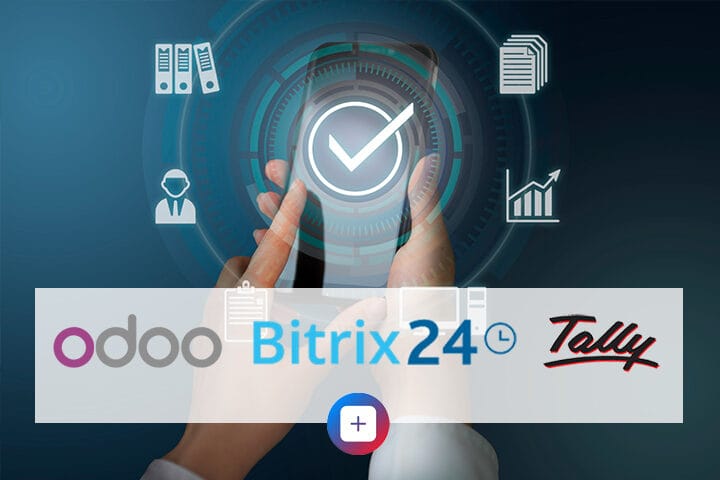
We partner with the world’s most trusted workspace and ERP providers to deliver best-in-class solutions.

Odoo is a comprehensive open-source ERP platform offering integrated business applications from CRM and inventory to accounting and HR, delivering flexibility and scalability for businesses of all sizes.

Bitrix24 is an all-in-one collaboration platform combining CRM, project management, communication tools, and task automation, enabling teams to work efficiently.

Tally is India’s leading business management software specializing in accounting, inventory, taxation, and compliance, trusted by millions of businesses worldwide.
…and expanding partnerships with additional leading ERP providers to serve diverse business needs.
Comprehensive ERP Packages for Every Business Stage
From subscription-based quick starts to full enterprise deployments—we meet you where you are.
$114B
Global ERP Market by 2030
15.5%
Annual Market Growth (CAGR)
70%
Cloud ERP Adoption Rate
85%
User Adoption in Hybrid Systems
Why Choose IndOS for Your ERP Journey
Big4 expertise meets agile execution—delivering enterprise excellence at SME speed.
Big4 Methodology
15+ years of enterprise consulting experience applied to mid-market implementations with proven frameworks and quality standards.
Hybrid Architecture
Proprietary approach combining transactional integrity with exceptional user experience—achieving 85%+ adoption rates versus 40% industry standard.

Rapid Value Delivery
Phased implementations that deliver measurable business value within 90 days, not 18 months. Early wins build momentum and stakeholder confidence.
Full-Cycle Support
From initial assessment through deployment, training, and ongoing optimization—we’re your long-term ERP success partner.

Regional Expertise
Deep understanding of compliance requirements and business practices across India, UAE, Saudi Arabia, Qatar, and emerging markets.
Transparent Pricing
Clear, predictable pricing models for subscriptions and projects. No hidden costs or surprise fees—just honest, value-driven partnerships.
SKILLEDX INSIGHTS
Strategic Perspectives for Smarter ERP Implementation
Expert insights on enterprise resource planning and digital transformation to optimize operations, enhance deliverables, and implement cost-effective ERP strategies for today’s competitive market. Learn about the latest ERP trends and how they can benefit your business
Let’s Build Something Great Together
Understanding your needs is our first priority. Schedule a consultation to explore possibilities.
Frequently Asked Questions
Here Are Answers to Some of the Most Common Questions We Receive:
What is IndOS and how is it different from standard ERP?
IndOS (Industry Operating System) goes beyond standard ERP by integrating your entire business ecosystem. While ERP handles core transactions (accounting, inventory, HR), IndOS brings ERP together with Workspace, AI & Automation, and Quality & Compliance into one unified platform. Think of it as your complete business operating system — not just back-office software.
What sets your ERP approach apart from traditional ones?
We combine Big4 methodology with agile delivery, focusing on rapid value realization. Our hybrid architecture separates transaction integrity from user experience, achieving 85%+ adoption rates versus the 40% industry standard.
Where do you majorly deliver your services?
Our clients are predominantly based overseas, and location is never a barrier — we deliver with the same precision and support across every time zone. We also have dedicated account managers based in the Middle East for direct, local access.
Can I start with basic ERP and upgrade to full IndOS later?
Absolutely. Most clients start with our ERP Subscription Services to get immediate value, then progressively add IndOS capabilities as they grow. Our architecture is designed for this — start with core ERP, then seamlessly integrate AI & Automation and Quality & Compliance when ready. Gap analysis, audit readiness assessment, and similar services come with a substantial discount for existing subscribers when upgrading to Hybrid IndOS.
Can you integrate ERP with our existing systems?
Integration is central to our approach. We build real-time integration fabric connecting your ERP core to CRM, eCommerce, field service, analytics, and other critical business systems—creating a unified digital ecosystem.
Which ERP platform is right for my business?
The right platform depends on your industry, size, processes, and growth trajectory. Odoo excels in manufacturing and distribution, Bitrix24 shines for service businesses needing collaboration tools, while Tally remains ideal for Indian accounting compliance. We conduct thorough assessments to recommend the optimal fit.
How do you ensure high user adoption rates?
Our hybrid architecture approach separates complex back-office transactions from intuitive front-end interfaces. We design mobile-first experiences for field users, provide role-based training, establish super-user networks, and measure adoption metrics throughout—achieving 85%+ adoption versus 40% industry averages.
How long does a typical ERP implementation take?
Our phased approach delivers initial business value within 90 days, with full core implementations typically completing in 4-6 months versus traditional 12-18 month timelines. We focus on early wins that build momentum.
What’s included in your ERP subscription services?
Our subscription services include platform licensing, ongoing updates, technical support, security patches, and access to our expert help desk. Think of it as managed ERP infrastructure—you focus on business, we handle the technology.
What’s your pricing model?
We offer transparent, predictable pricing across three models: subscription (monthly/annual), fixed-price implementation projects, and hybrid retainer + project combinations. All engagements begin with our mandatory gap analysis to ensure mutual clarity on scope and investment.
What is your mandatory gap analysis process?
Before any engagement, we conduct a comprehensive gap analysis comparing your current state to desired future state. This clarifies scope, identifies risks, validates ROI assumptions, and ensures both parties have complete alignment before commitment—protecting your investment and our reputation.
What ongoing support do you provide post-implementation?
We offer comprehensive support packages including help desk access, system optimization, user training refreshers, performance monitoring, and continuous improvement initiatives. Many clients engage us for managed services, treating us as an extension of their IT team for ongoing ERP excellence.
Hybrid ERP Solutions
STARTING FROM
$999*
/Project
*Gap Analysis only | Implementation costs separate
Best-of-breed architecture